

The Mighty Mo: The Surprising History of the USS Missouri
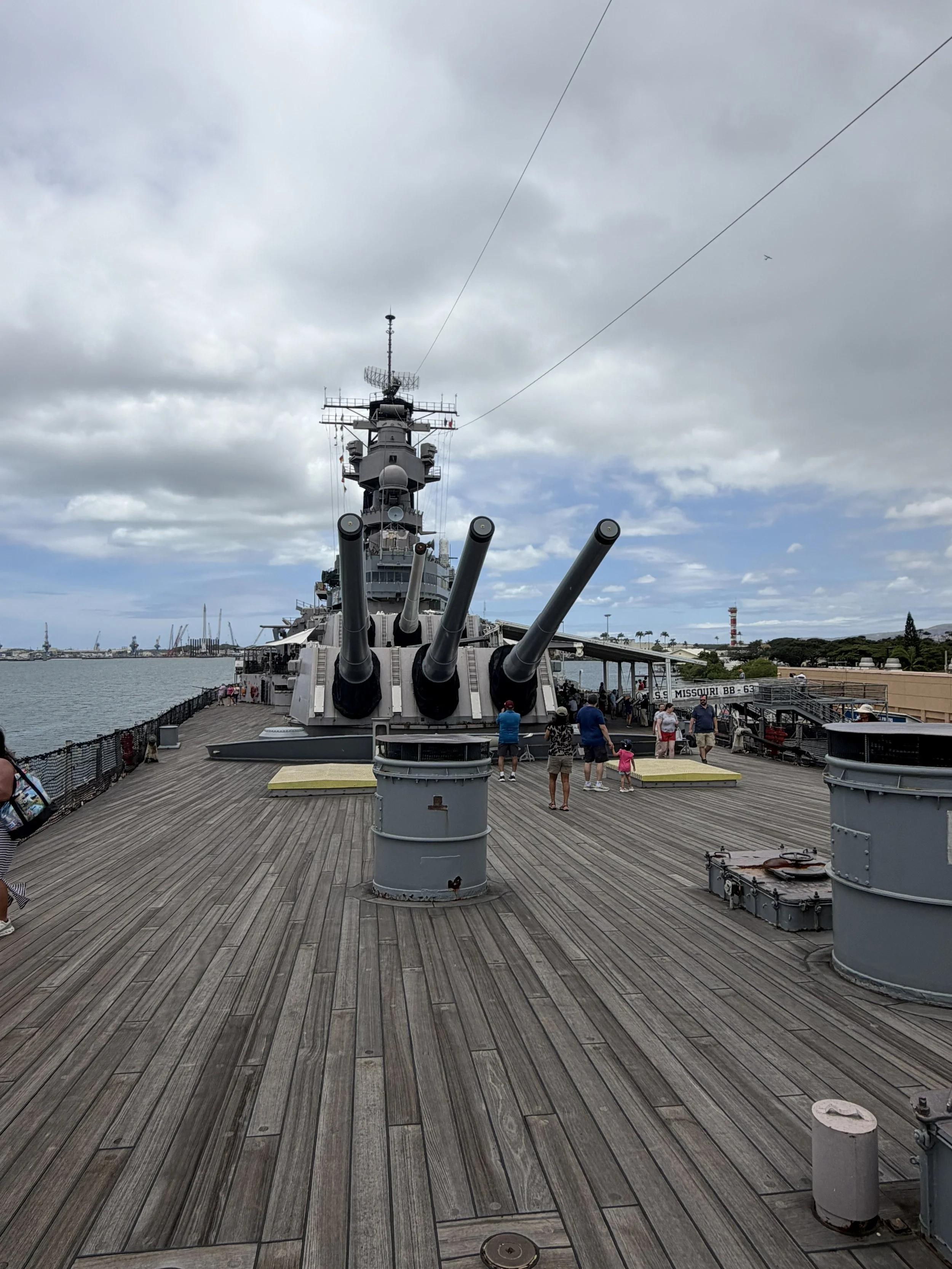
Most visitors know the USS Missouri for one thing: it's the ship where Japan formally surrendered, ending World War II. That's true, and it's reason enough to visit. But the "Mighty Mo" has a much longer, stranger story than most people realize, and a few details that even history buffs are often surprised to learn.
She Wasn't Even at Pearl Harbor in 1941
Here's the twist most visitors don't expect: the Missouri had nothing to do with the attack on Pearl Harbor. She wasn't launched until January 1944, more than two years after the bombing. Today she sits practically next door to the USS Arizona, but the two ships never crossed paths during the war itself. Her connection to Pearl Harbor came later, and it was symbolic rather than historical.
Christened by a Future President's Daughter
The Missouri was launched at the Brooklyn Navy Yard in January 1944, christened by 19-year-old Margaret Truman; daughter of then-Senator Harry Truman. Neither of them could have known that within two years, her father would be president, and the ship she'd just smashed a bottle of champagne against would host the formal end of World War II.
The Kamikaze Dent You Can Still See Today
In April 1945, during the Battle of Okinawa, a Japanese kamikaze plane struck the Missouri's starboard side. It could have been catastrophic. Instead, the plane's fuel ignited without seriously damaging the ship, and the crew reportedly gave the young pilot a proper burial at sea the next morning; an act of respect rare for wartime. The dent from that impact is still visible on the hull today, and it's one of the more quietly powerful details guests notice once they know to look for it.
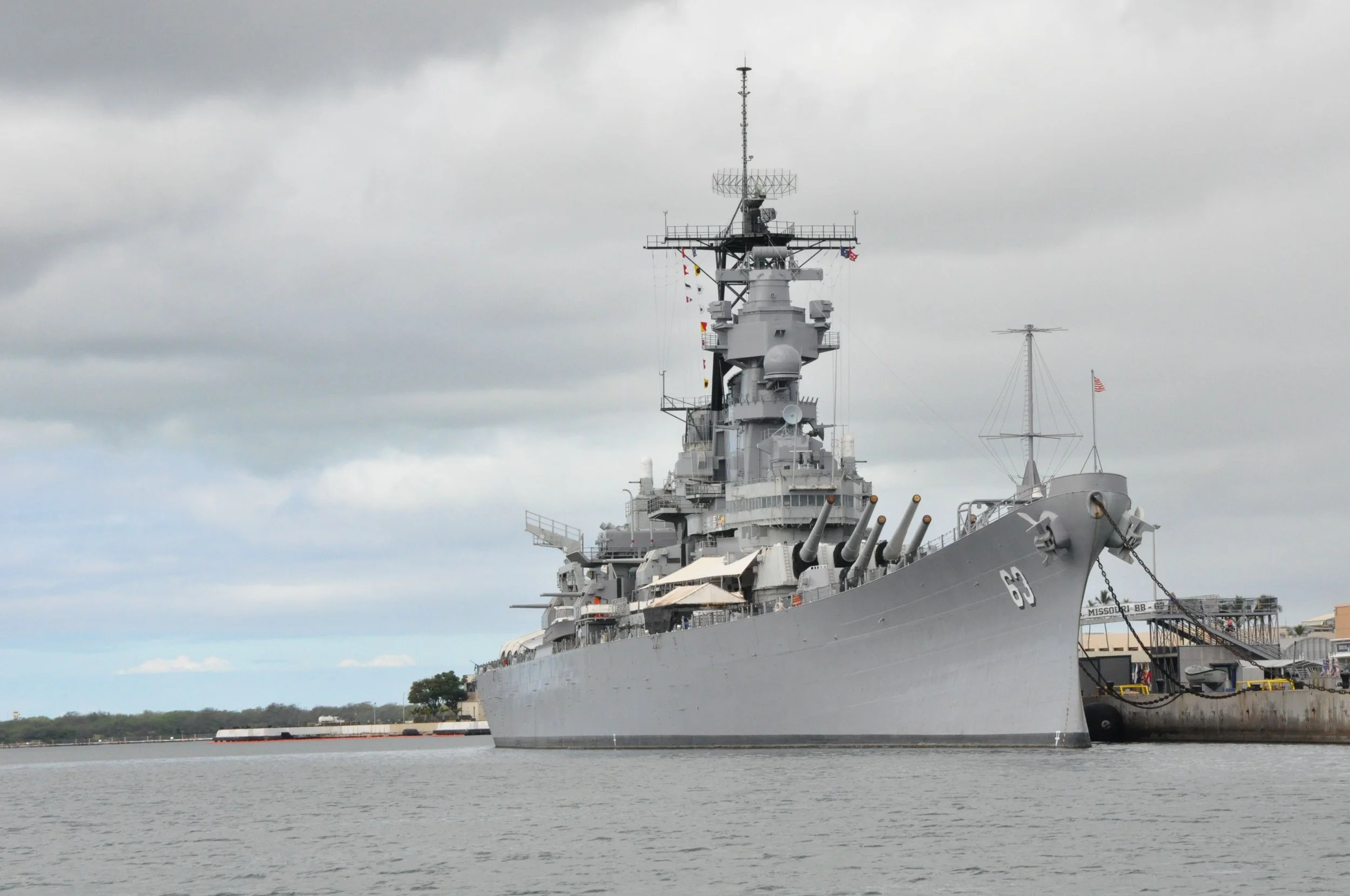
The Surrender Ceremony Took Only 23 Minutes
On September 2, 1945, some of the most powerful men in the world stood on the Missouri's deck: General Douglas MacArthur, British Admiral Sir Bruce Fraser, and representatives from China, the Soviet Union, and Australia among them. At 8:56 that morning, Japanese Foreign Minister Mamoru Shigemitsu stepped aboard. Twenty-three minutes later, the Instrument of Surrender had been signed, and World War II was officially over. It's a strange thing to stand on that exact spot today and realize how briefly it actually took to close out a six-year war.
She Kept Serving Long After 1945
The Missouri wasn't retired as a monument after the surrender. She went on to serve in the Korean War, was decommissioned, reactivated in 1986 with modern missile systems, and served again in Operation Desert Storm in 1991; nearly 50 years after she was launched. Few ships in naval history have had a service record spanning three separate wars.
She's Moored Where the USS Oklahoma Sank
Here's a detail almost nobody mentions: since 1999, the Missouri has rested in the exact spot on Battleship Row where the USS Oklahoma was moored during the December 7, 1941 attack; and where the Oklahoma capsized and sank. It wasn't an accident. The placement was intentional, positioning the ship that represents the war's end almost directly beside the site of one of its most devastating losses.
Why the Mighty Mo Ended Up at Pearl Harbor at All
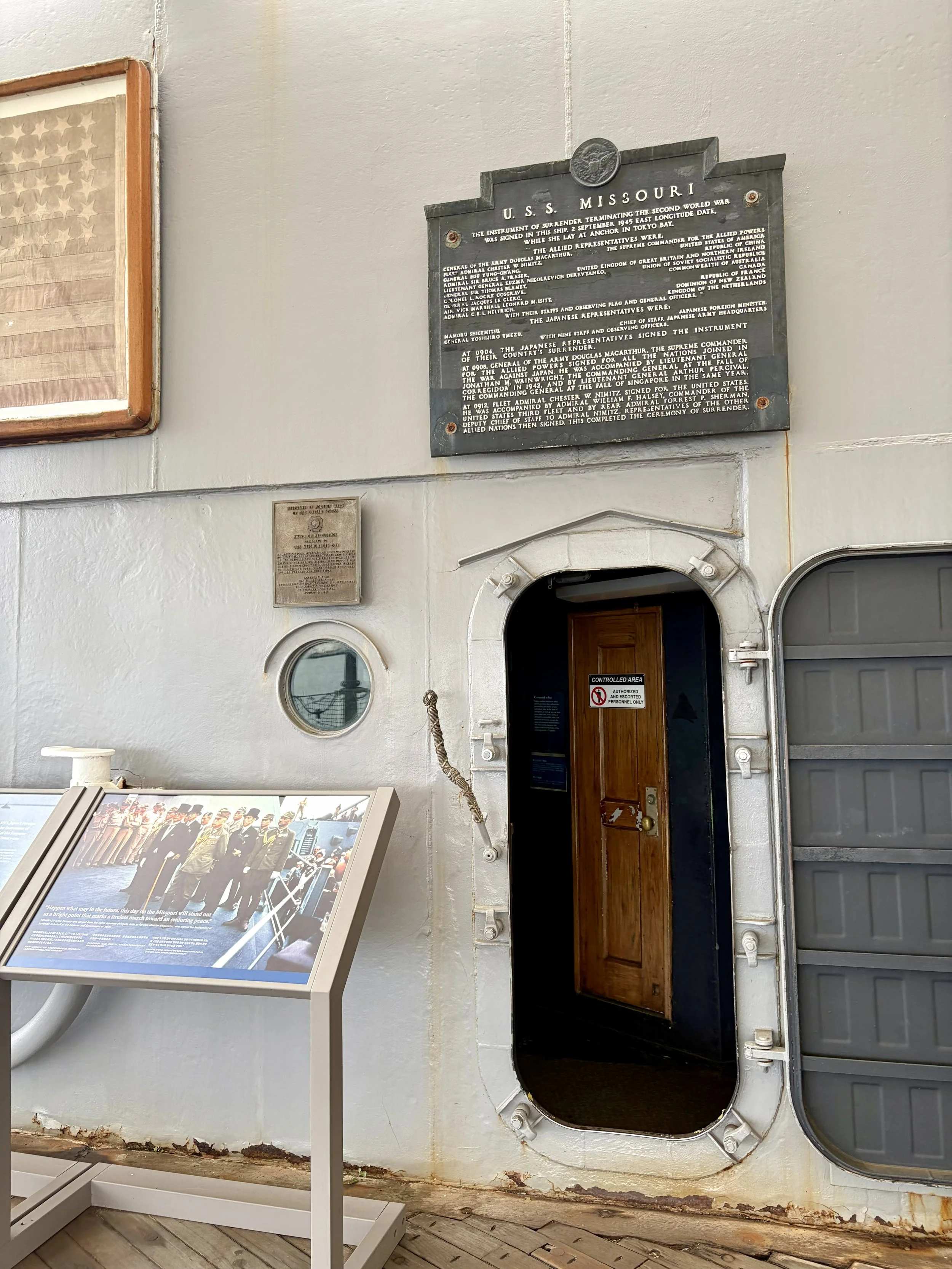
After her final decommissioning in 1992, the Missouri could have been sold for scrap like many retired battleships. Instead, she was donated to the USS Missouri Memorial Association in 1998 and towed to Pearl Harbor; deliberately placed near the Arizona so visitors could experience both ends of the story in one place: the harbor where World War II began for the United States, and the ship where it officially ended.
Seeing It in Person
Reading about the surrender deck is one thing. Standing on it, a few hundred yards from where the Arizona still rests beneath the water, is something else entirely. It's part of why so many visitors describe seeing both memorials in a single day as one of the most meaningful things they do on Oahu.
Want to see it for yourself? Our USS Arizona & Battleship Missouri Tour takes you to both, so you can walk the full story from beginning to end.